

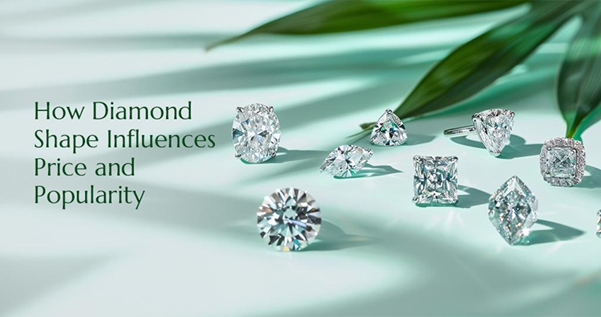
Choosing a diamond is a big decision. Shape affects how bright the stone looks, how large it appears, and what you pay. This guide explains how shape changes diamond price per carat, why some shapes are more popular, and what to expect at common size points like 1-carat diamond price and 5-carat diamond price.
Why Shape Changes Diamond Price Per Carat
Here are the key reasons:
How much of the original uncut diamond is removed
Cutters start with an original, uncut diamond. To make a clean shape, they remove parts of it. Round shapes need more removal to get perfect symmetry. More removal means more waste. That pushes up the diamond price per carat for round stones. Ovals, cushions, princess, and many radiant shapes often need less removal. That can give better value for the same carat, colour, and clarity.
Demand
Round is the most requested shape. High demand keeps prices firm. Ovals and cushions are also very popular because they look large for their weight. Emerald and Asscher shapes attract buyers who like calm flashes instead of more sparkle.
Craft and precision
Some diamond shapes need very precise work. Rounds and hearts need tight symmetry to perform well. More time and skill can raise the diamond price.
Shape Guide for Price and Popularity
Here is what you should know about the shapes:
- Round Brilliant: Classic and bright. Often, the highest diamond price per carat. Easy to love and easy to resell.
- Oval: Slim look and more finger coverage. Often 10 to 20 percent below the round for similar quality. Check for a dark bow tie across the center.
- Cushion: Soft corners and a warm glow. Good value across modern and antique styles. Many options in the market.
- Emerald and Asscher: Step cuts with a mirror effect. They show inclusions more than brilliant cuts. Many buyers choose higher clarity here.
- Princess and Radiant: Modern angles and lively fire. Often good value per carat. Use settings that protect corners on princess stones.
- Pear, Marquise, Heart: Expressive shapes. Prices can change with fashion. Symmetry and cut quality matter a lot.
Price by Size: 1 to 5 Carats
Here is a general price guidance you should know:
1-carat diamond price
This is the most common size available. Round shapes cost more per carat. Ovals and cushions can offer a similar face-up size at a lower rate if the cut is substantial.
2-carat diamond price
Per-carat rates often step up here. Many buyers choose this size. Elongated shapes like oval, marquise, and pear give more coverage for the same weight.
3-carat diamond price
Rarity is higher. Minor flaws are easier to see. Step cuts look refined but show inclusions fast. Many buyers spend more on clarity and clean cutting at this level.
4-carat diamond price
This-sized diamond is generally high in demand and low in supply. Slight differences in symmetry, polish, and light return can change both look and price in a big way. Careful selection matters.
5-carat diamond price
Very rare-sized diamond. Shape choice and ring build affect comfort and balance. Plan prongs and metal strength with care.
Carat vs Gram: Use the Right Measure
Diamonds are priced by carat, not by gram. One carat equals 0.2 grams. If you see the diamond price per gram, it is a store conversion or a mistake. For fair comparisons, use diamond price per carat only.
Shape Choices That Lower Your Diamond Set Price
If you are planning a diamond bridal jewellery set, choose the shape first. Elongated shapes give more visual coverage with less weight. This can reduce the total diamond set price without lowering the impact. For shapes with points or corners, like a princess or heart, pick settings that protect edges. That reduces the chance of chips and lowers future repair costs.
Think about how the center stone, side stones, and band will work together. The proper outline can help you use fewer total carats while keeping the look rich and balanced.
How to Choose With Confidence
Decide on the look you love first. If you love bright sparkle, try round, radiant, or princess. If you love a calm glow, try emerald or Asscher. Look for the cut quality to be high for your chosen shape. A good cut ensures both style and budget. Refer to the same shape, carat, colour, clarity, and cut grade when you judge diamond price per carat. Think about the whole design early if you want matching pieces, so that you can control the full diamond set price.
Conclusion
Shape is a key driver of both price and popularity. Round is timeless and usually costs the most per carat. Oval and cushion give strong coverage for less money. Step cuts bring a clean and elegant look, but ask for higher clarity. Pear and marquise can be lavish when they are well cut.
Start with the look you love, confirm a substantial cut, and then compare prices within the exact specifications. Plan your complete look early if you want a set. This simple method keeps your style high and your spending in control.